
In June 1878, on a racetrack at Palo Alto, California, a row of twelve cameras was triggered one after another as a horse named Sallie Gardner galloped past. The photographer was Eadweard Muybridge, and his patron was the railway magnate Leland Stanford, who wanted to know whether all four of a horse’s hooves left the ground at once. They did, but not in the position painters had always shown. The legs were gathered beneath the body, not stretched out like a rocking horse.
The images travelled fast. Within months they were reproduced in Scientific American and discussed in Paris, where they caught the attention of a physiologist named Étienne-Jules Marey.
The photographic gun
Marey had spent years studying how bodies move, using pneumatic sensors and recording instruments that traced movement as lines on smoked paper. Muybridge’s photographs suggested a better tool. In 1882 Marey built a chronophotographic gun, a rifle-shaped camera that could take twelve exposures a second on a rotating plate, and pointed it at birds.
Unlike Muybridge, who used a battery of separate cameras, Marey came to prefer recording successive phases on a single plate, so that a gull or a pelican became a fan of overlapping wings across one image. The result was less a series of pictures than a diagram of time. Later he dressed assistants in black suits marked with white lines and dots along the limbs and filmed them walking and jumping against a dark backdrop, so that only the moving skeleton of the action registered on the plate. Those images look strikingly like modern motion capture, more than a century before the term existed. Our featured image, with its crane rising through five stages against bands of ochre, burgundy and blue, borrows exactly that idea.
A gallery of movement
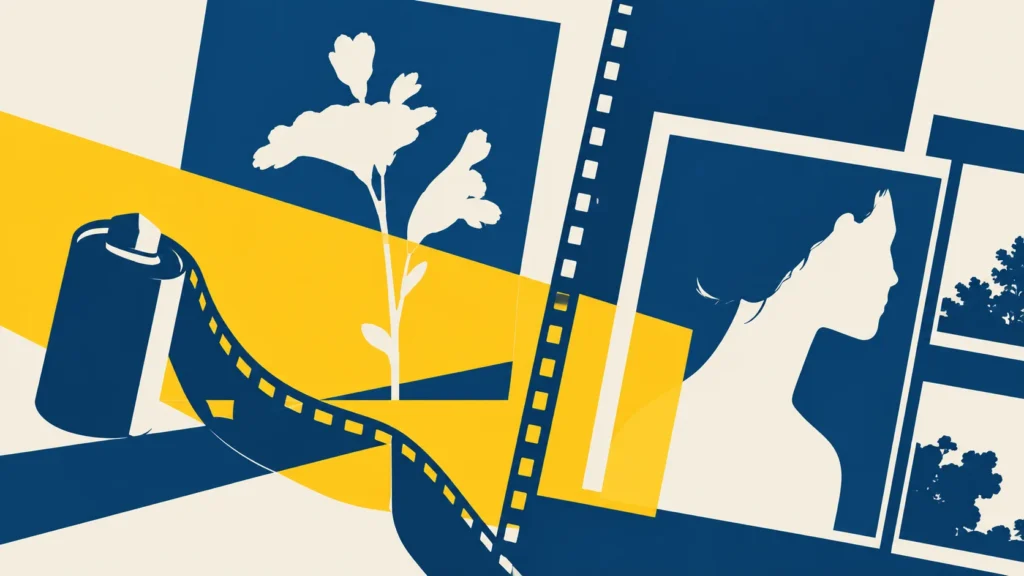
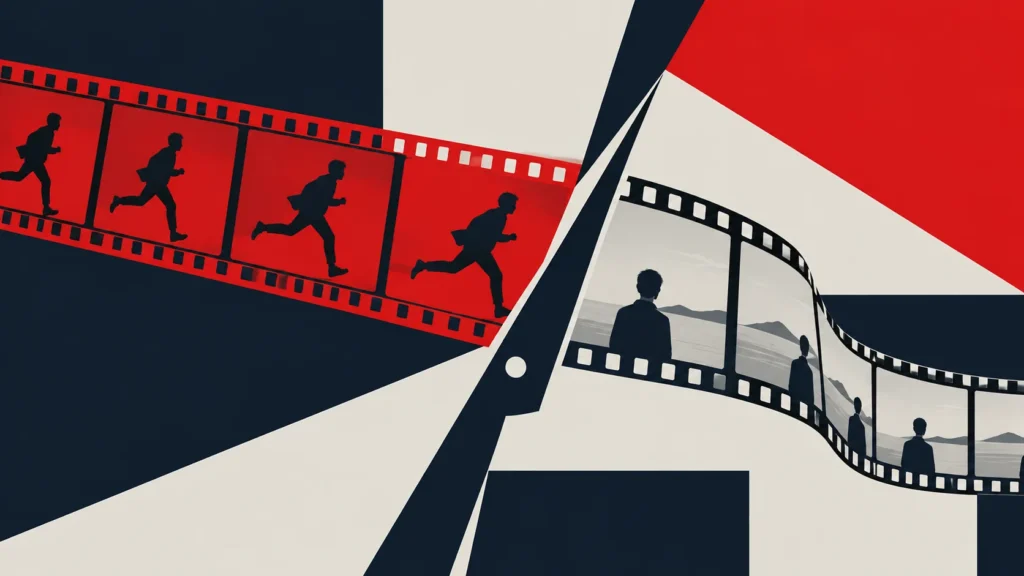
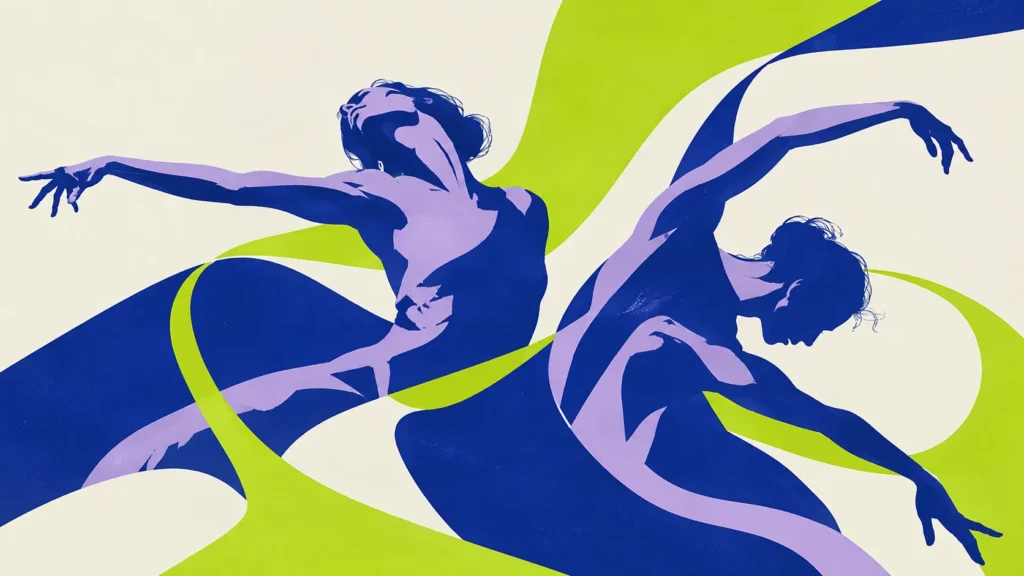
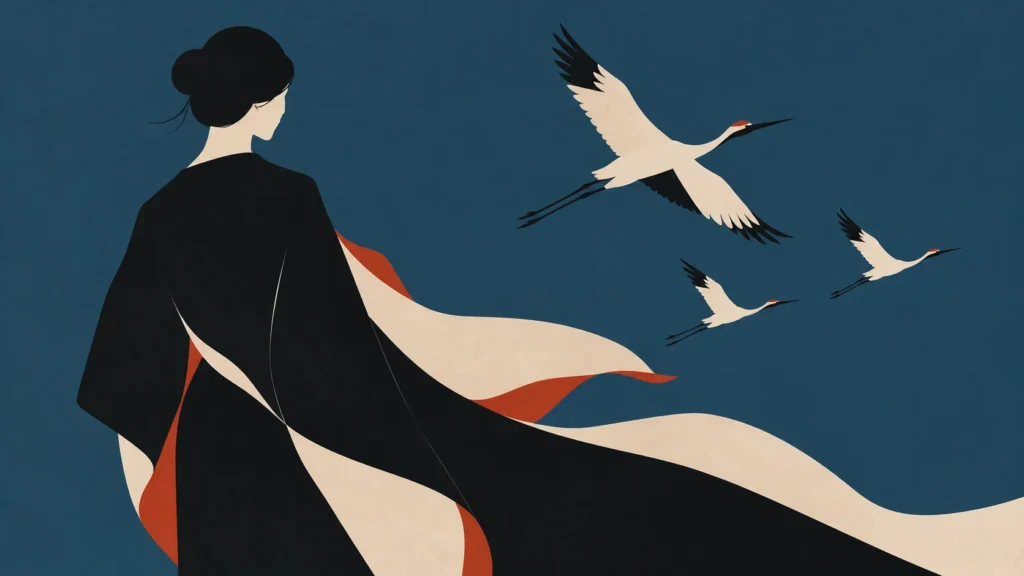
The images in this gallery all return to the same problem: how to show something moving in a medium that holds still. The crane breaks its flight into stages. The film strip lays frames side by side. The dancers twist through a single elastic gesture. The cranes over the woman’s shoulder are caught in three positions at once, like a sentence read in one glance.
From science to art
Neither Marey nor Muybridge thought of himself mainly as an artist, though Muybridge was a professional photographer with a strong instinct for showmanship. His later work at the University of Pennsylvania, published in 1887 as Animal Locomotion, ran to 781 plates of horses, birds, athletes, children and dancers. He also built the zoopraxiscope, a projector that animated painted copies of his sequences, and toured it widely.
Painters absorbed the lesson quickly. Edgar Degas changed the way he drew horses after seeing the photographs. Thomas Eakins, who worked with Muybridge in Philadelphia, made motion studies of his own. A generation later the Italian Futurists and Marcel Duchamp turned the overlapping forms of chronophotography into a style. Duchamp’s Nude Descending a Staircase, No. 2, withdrawn from the Paris Salon des Indépendants in 1912 and the scandal of New York’s Armory Show the following year, is almost a Marey plate painted in oil.
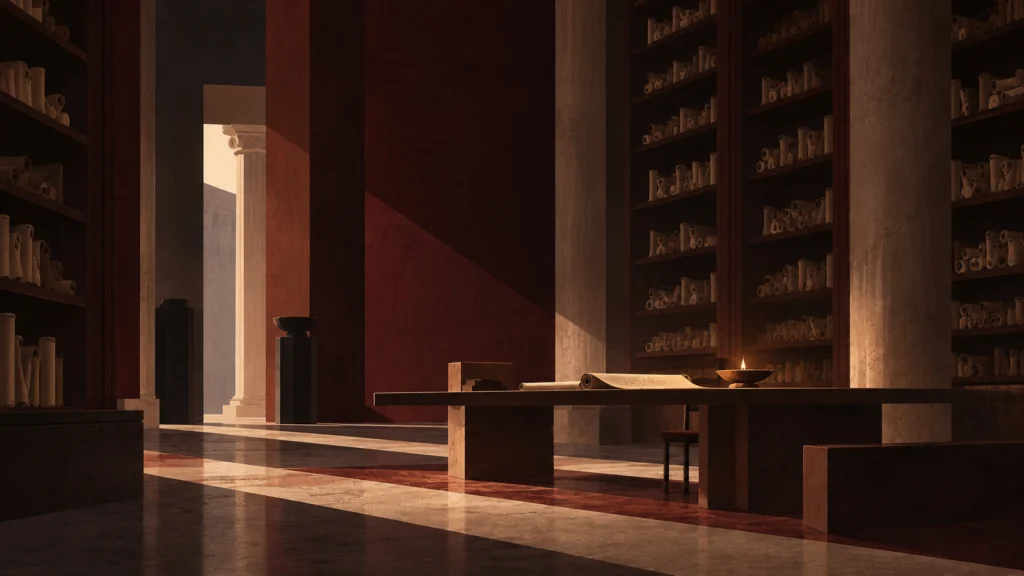
Art does not reproduce the visible; rather, it makes visible.
Paul Klee, “Creative Confession”, 1920
The road to cinema
Cinema history usually names the Lumière brothers’ public screening in Paris in December 1895 as the beginning. But the machine the Lumières perfected rested on decades of earlier experiment, and Marey’s laboratory, with its moving film strips and rapid exposures, was one of its foundations. Marey himself was not much interested in projecting continuous movement. He wanted to analyse it, to stop it and take it apart.
That difference still matters. Cinema gives back the illusion of motion that chronophotography broke into pieces. The two impulses, to stop time and to set it running again, have shaped the visual culture of the century since. Every slow-motion replay, every frame-by-frame study of a sprinter or a dancer, goes back to a man in a field on the edge of Paris with a camera shaped like a gun, waiting for a bird to cross the sky.



View comments (0)