Watch the last minutes of François Truffaut’s The 400 Blows (1959). Antoine Doinel escapes from a reform school and runs. The camera tracks beside him for what feels like an unreasonable length of time, past fields and fences, until he reaches the sea, wades into the shallows, turns, and looks straight at us. The image freezes. The film ends.
Most of the power of that ending comes from editing decisions, and most viewers never notice them. The long run is allowed to continue without a cut, so that we feel its duration in our own bodies. The freeze is the cut that refuses to happen. Truffaut and his editor Marie-Josèphe Yoyotte understood that the most important cuts are sometimes the ones you withhold.
The face that did not change
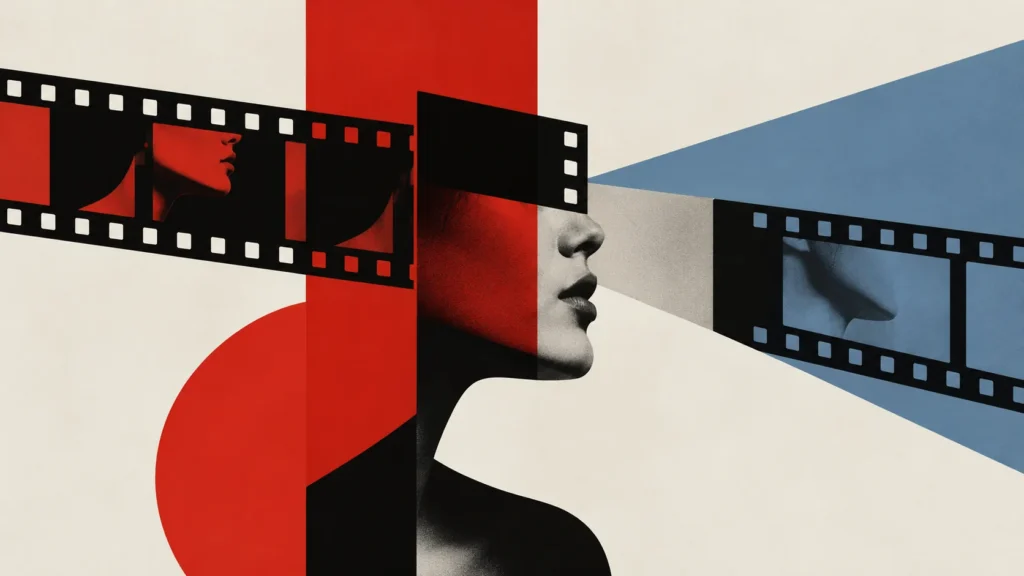
In the early 1920s a young film teacher carried out a now famous experiment. He took a shot of an actor with a neutral expression and intercut it with different images: a bowl of soup, a child in a coffin, a woman on a divan. Audiences, so the story goes, praised the actor’s subtle range of hunger, grief and desire. The face had not changed. The meaning came from the juxtaposition.
The original footage is lost, and the details have been debated ever since, but later studies have broadly confirmed the effect. Context shapes how we read a face. For editors the lesson was liberating and slightly alarming. A film is not recorded so much as assembled, and the person who assembles it has enormous power over what it seems to say.
Rules made to be broken
Classical Hollywood developed an editing grammar designed to make that power invisible: cutting on action, the 180-degree rule, eyeline matches, shot and reverse shot. The aim was continuity, a sense that the camera simply happened to be in the right place. Then, in 1960, Jean-Luc Godard’s Breathless jumped forward within single shots, skipping fragments of time as Jean Seberg sat in a moving car, and the grammar suddenly looked like a choice rather than a law.
What Godard proved was not that continuity editing is wrong, but that it is a style, and that audiences could follow far more fragmented storytelling than anyone had assumed. Music videos, television advertising and eventually the visual culture of the internet have pushed that discovery to its limits.
The blink
Some of the most thoughtful modern writing on the subject comes from Walter Murch, the editor and sound designer behind The Conversation and Apocalypse Now. In his short book In the Blink of an Eye he suggests that a good cut often falls where a viewer would naturally blink, at the moment a thought completes itself. He also ranks the priorities of any cut, placing emotion at the top, above story and rhythm, and well above the strict rules of spatial continuity.
Cinematography is writing with images in movement and with sounds.
Robert Bresson, Notes on the Cinematographer
Bresson’s aphorism reminds us that editing is closer to writing than to photography. A shot is a word; the cut is the syntax. Change the order and the sentence means something else.
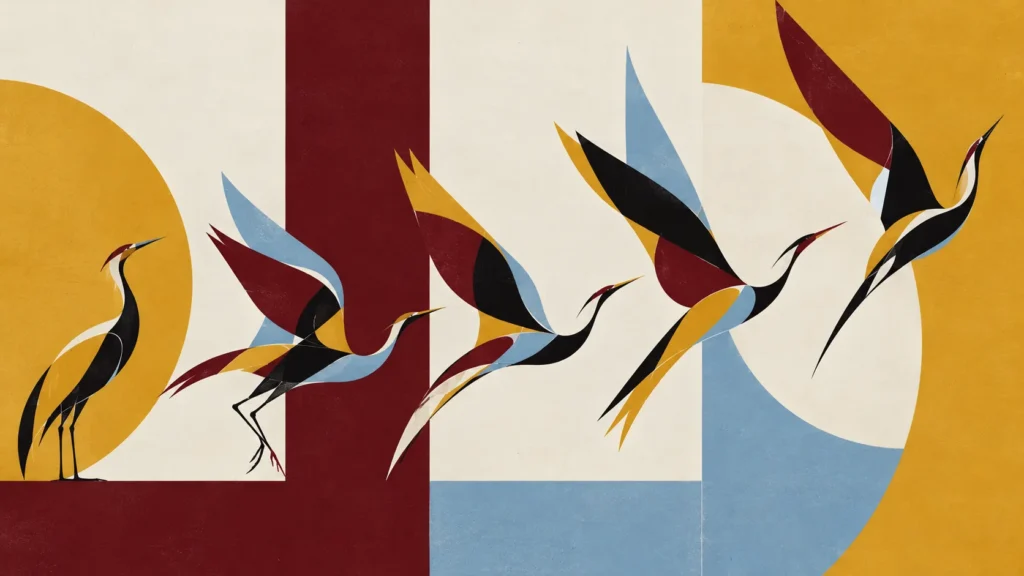
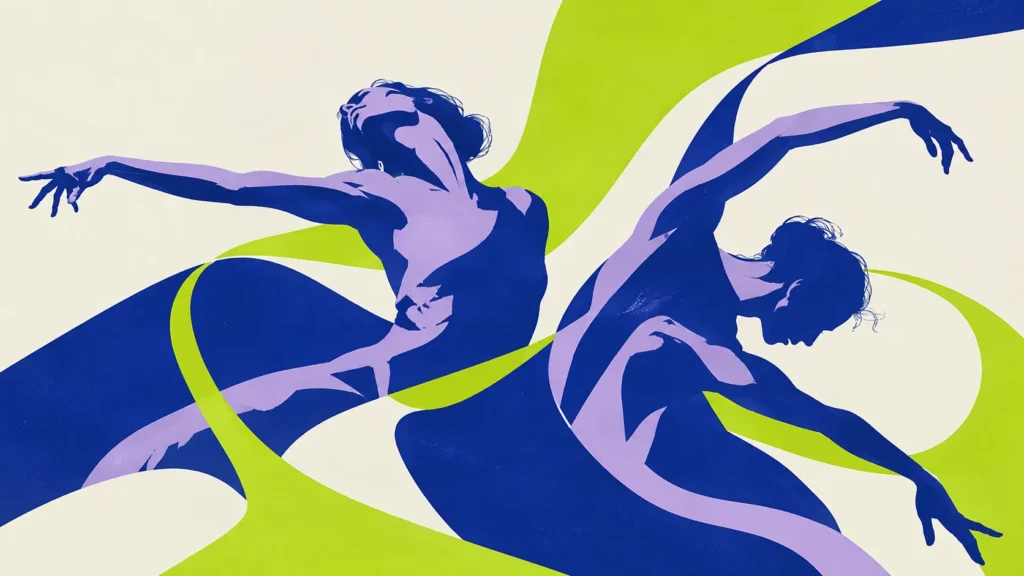
The pair of images above makes the point in miniature. A crane’s flight broken into separate positions, two dancers caught in mid-turn: each frame is static, and yet placed side by side they suggest movement, sequence, even narrative. The eye fills the gap. Every film relies on that small act of collaboration.
The craft of not being seen
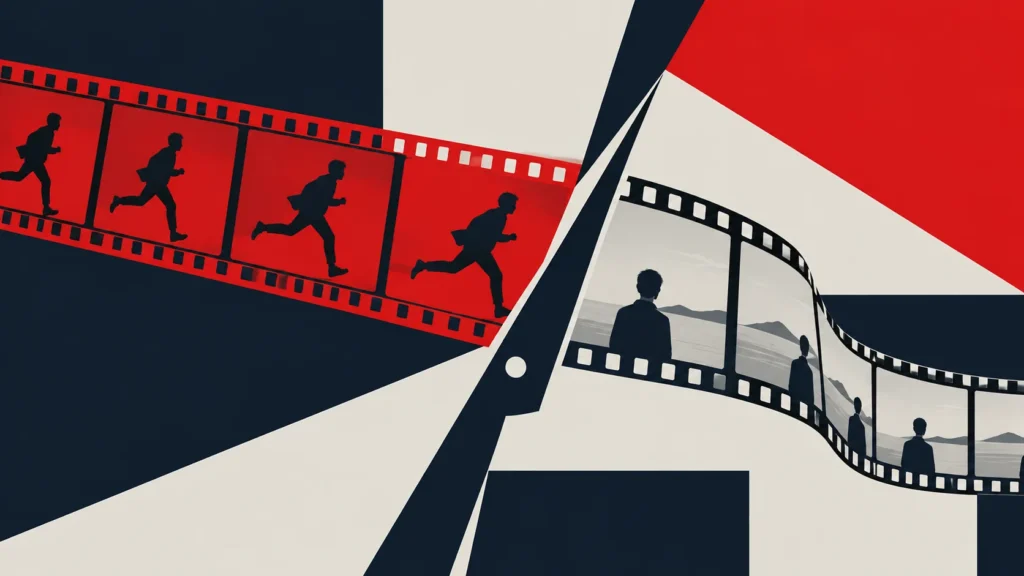
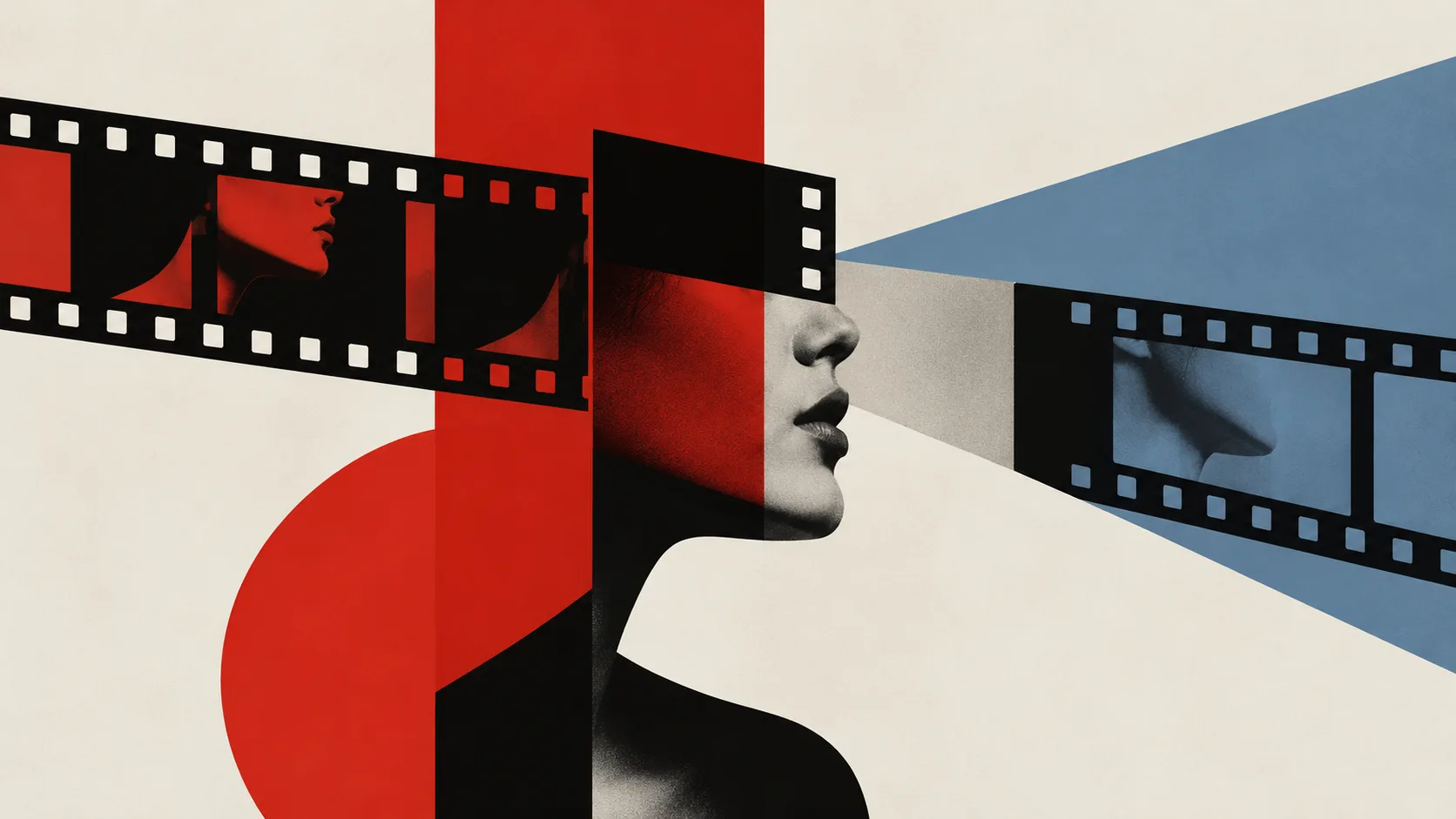
Our featured image turns the edit into a literal gesture, a pair of scissors slicing between a red strip of a running man and a grey strip of figures standing on a shore. It is a good reminder that for most of film history editing was physical work, done with blades, tape and a bench full of hanging trims. Digital tools have made cutting faster, but the decisions are no easier.
The best editors never forget the viewer. They cut not to show everything, but to leave just enough room for the audience to complete the thought themselves. When it works, nobody notices. That invisibility is the craft, and it is also why editors remain the least celebrated of filmmakers.

View comments (0)