
Skip to content
Design

The Hand, the Head and the Heart

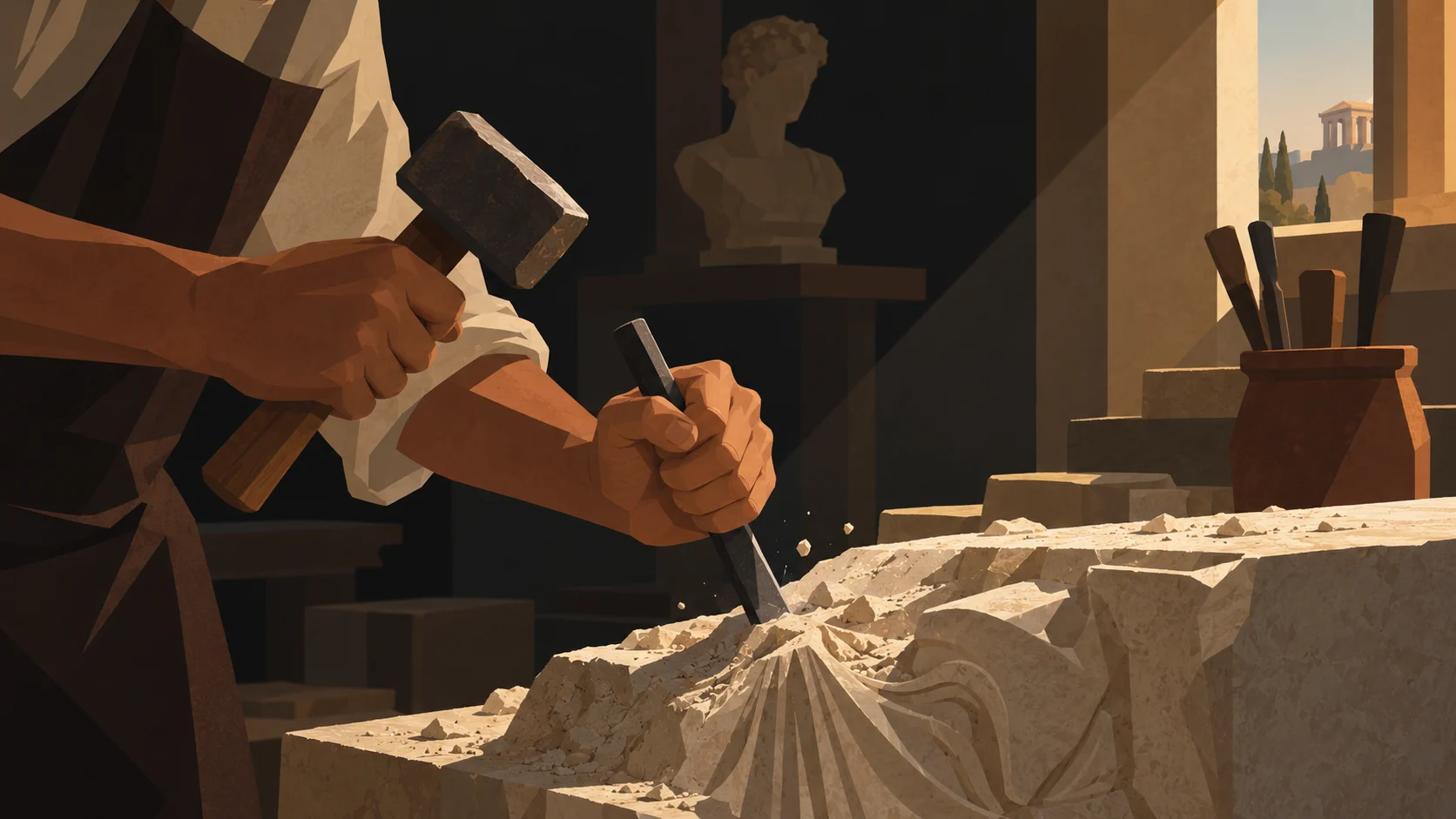
John Ruskin spent a lifetime arguing that good work cannot be split into thinking and doing. One sentence from The Two Paths holds the whole argument.

Fine art is that in which the hand, the head, and the heart of man go together.

John Ruskin, The Two Paths (1859)

TL;DR

Ruskin gave the lectures collected in The Two Paths to art students and industrial audiences. His test for fine art was not subject or medium but whether thought, skill and feeling met in one pair of hands.

Key points

  • Ruskin lectured to designers and manufacturers, not only painters
  • He rejected the split between designer and maker
  • The idea fed straight into the Arts and Crafts movement

The lectures in The Two Paths were given to audiences who made things for a living: wallpaper, ironwork, pottery. Ruskin wanted them to stop thinking of art as something that happened elsewhere, in galleries.

His sentence sets three conditions. The hand must be trained, the head must understand what it is doing, and the heart must care. Take away any one and you get mechanical work, clever work or sentimental work.

William Morris read Ruskin at Oxford and built a firm on the idea. A century and a half later the sentence still works as a checklist for anyone deciding whether a thing was made or merely produced.

View comments (0)

Leave a comment

Je e-mailadres wordt niet gepubliceerd. Vereiste velden zijn gemarkeerd met *

Loading next post

Find a story

Type at least two characters to search.