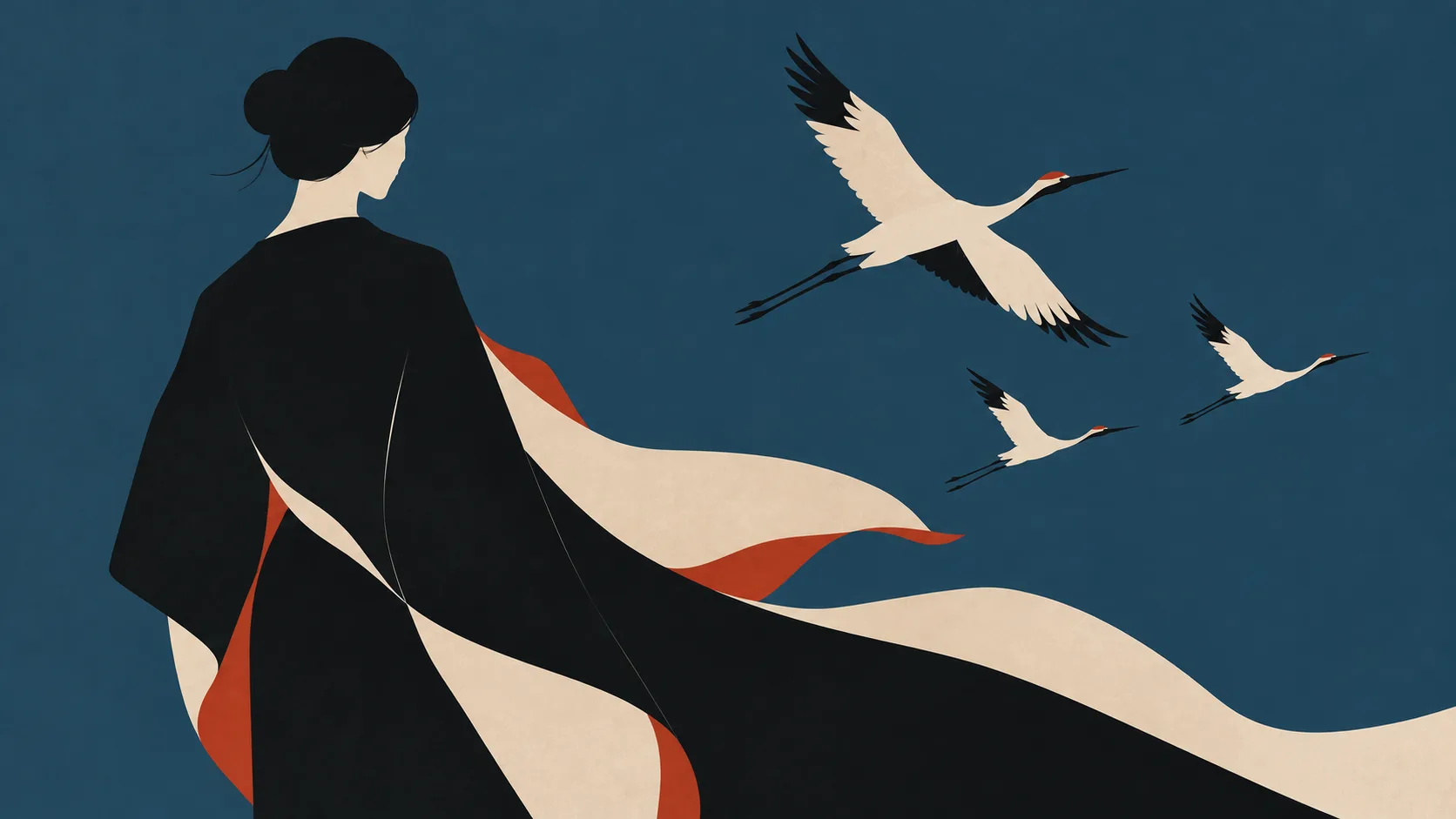
Few art forms have travelled as far, or influenced as many other artists, as the Japanese woodblock print. This exhibition follows a century of the medium, from the great landscape series of the 1830s to the shin-hanga, or new prints, made for collectors at home and abroad in the early twentieth century.
The selection is organised around a handful of recurring subjects rather than strict chronology. Cranes and herons in flight. Robes caught by the wind, their linings flashing red. Figures seen from behind, looking out at weather. Snow on a bridge. Each subject shows how printmakers used flat colour, bold outline and empty space to suggest movement and atmosphere.
How the prints were made
A woodblock print was a collaboration. A publisher commissioned the design, an artist drew it, a carver cut a separate block for each colour, and a printer laid the colours by hand, one sheet at a time. A central room of the exhibition shows the stages of this process, with carving tools, proof sheets and a set of blocks lent for the occasion.
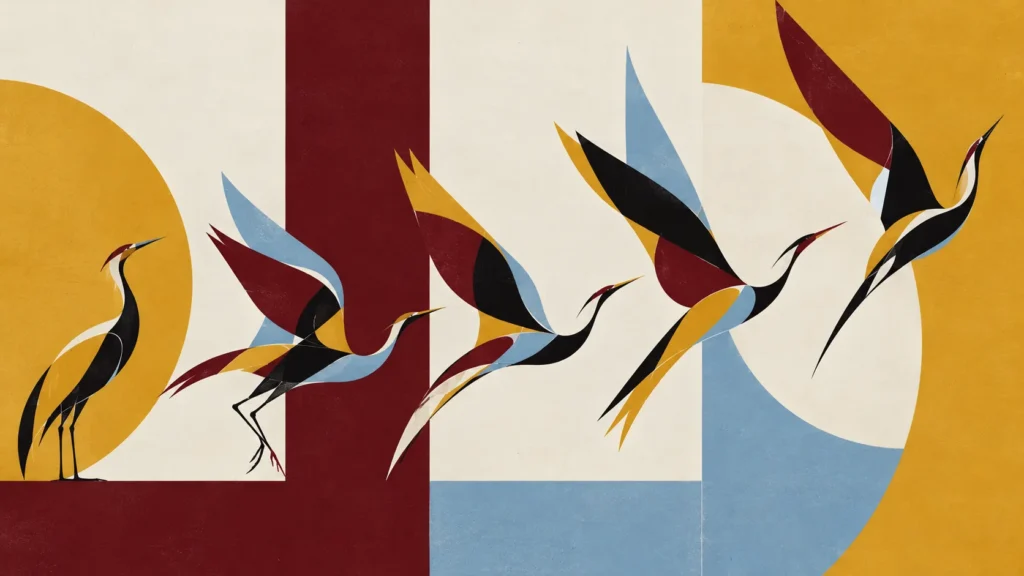
The exhibition also looks briefly at the reception of these prints in Europe. From the 1860s onward, painters in Paris and elsewhere collected them avidly, and their influence can be seen in the cropped compositions and flat colour of much modern art.
Visiting
- Open Wednesday to Monday, 10:00 to 18:00
- Closed on Tuesdays and on 25 December
- Family drawing sessions on the first Sunday of each month
Prints are light-sensitive, so the galleries are kept dim and some works will be rotated in early February. A second visit is encouraged, and tickets bought after 1 February include a free return entry before the exhibition closes.