

In March 1920, during the intermission of a concert at the Galerie Barbazanges in Paris, a small group of musicians began to play short, repetitive phrases from different corners of the room. The programme asked the audience to ignore them, to talk, walk about and drink as if nothing were happening. The audience, being polite, went quiet and listened. Erik Satie, whose idea it was, reportedly hurried around the room urging people to keep talking.
He called it musique d’ameublement, furniture music: sound meant to be part of the room, like the wallpaper or the chairs, rather than something to sit in front of and admire.
The quiet eccentric
By then Satie was in his fifties and had spent decades on the edges of Parisian music. He had played piano in the cabarets of Montmartre, founded a church with himself as its only member, and written pieces with titles like Three Pieces in the Shape of a Pear. His Gymnopédies, three slow, glassy piano pieces composed in 1888, were little known in his lifetime beyond a circle of admirers that included Debussy, who orchestrated two of them.
Those pieces now seem almost too familiar, used in films, advertisements and countless playlists for sleep and study. But it is worth hearing them as Satie’s contemporaries did. Against the heavy emotional weather of late Romanticism, they were startling in their refusal to develop, to build, to demand anything at all. They simply continue, then stop.
Eight hundred and forty times
Satie’s most extreme experiment was Vexations, a single page of music with a note suggesting it be played 840 times in a row. Whether he meant it seriously is still argued. In 1963 John Cage took him at his word and organised a performance in New York with a relay of pianists that lasted more than eighteen hours. A handful of listeners stayed for the whole thing.
Cage loved Satie because he heard in him a way out of the idea that music must be about expression or drama. Duration, repetition and attention were enough. Cage’s own 4′33″, first performed in 1952, pushed the thought further: the sounds of the room, of the audience shifting in their seats, of rain on the roof, could be the music.
From furniture to ambient
In the mid-1970s Brian Eno, laid up after an accident and listening to a record playing too quietly for him to get up and adjust, began to think about music that could exist at the edge of perception. The result was a series of albums that named a genre. The liner notes for the first of them, Music for Airports, released in 1978, read in places like a manifesto Satie might have signed.
Ambient Music must be able to accommodate many levels of listening attention without enforcing one in particular; it must be as ignorable as it is interesting.
Brian Eno, liner notes to Music for Airports, 1978
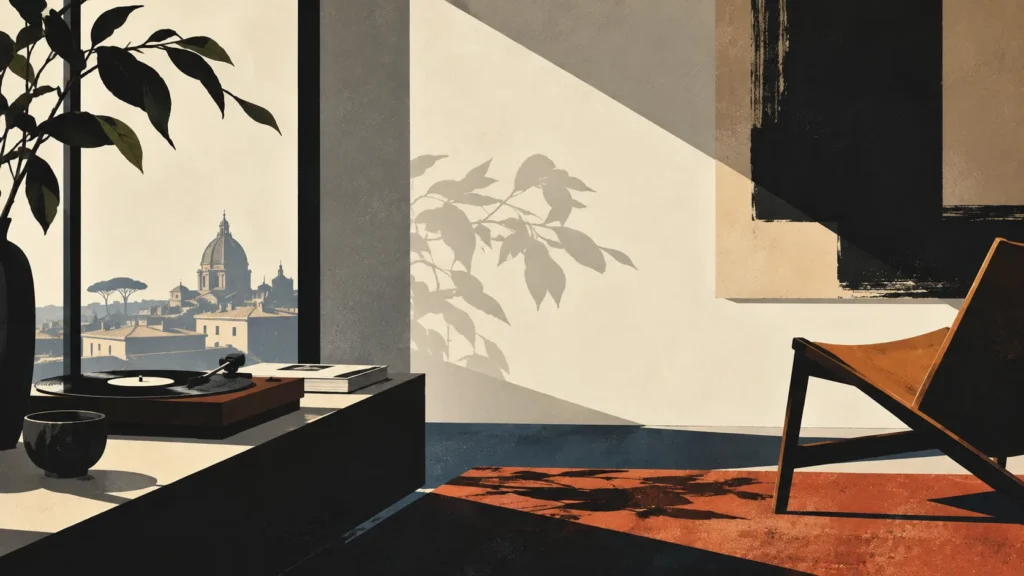
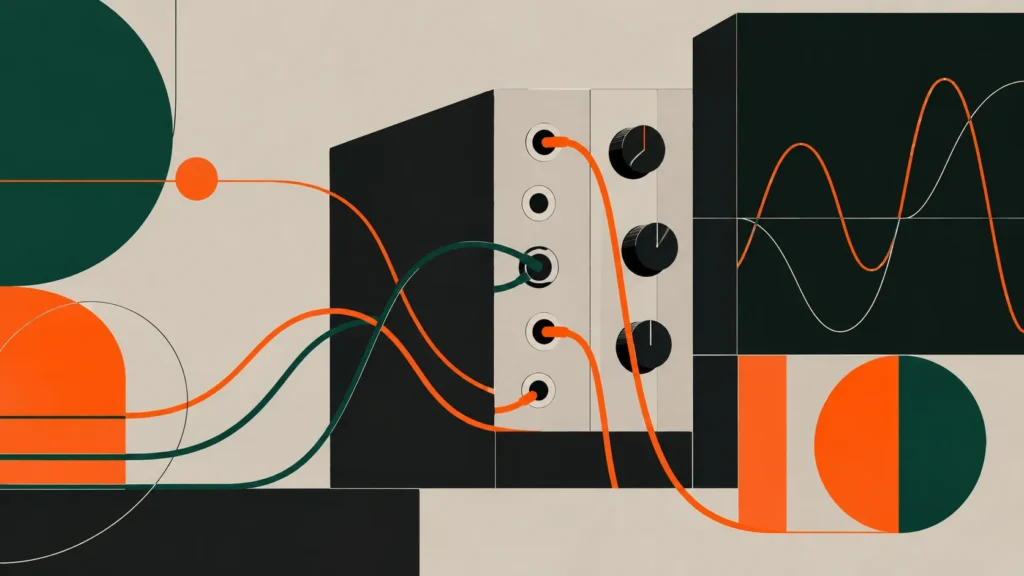
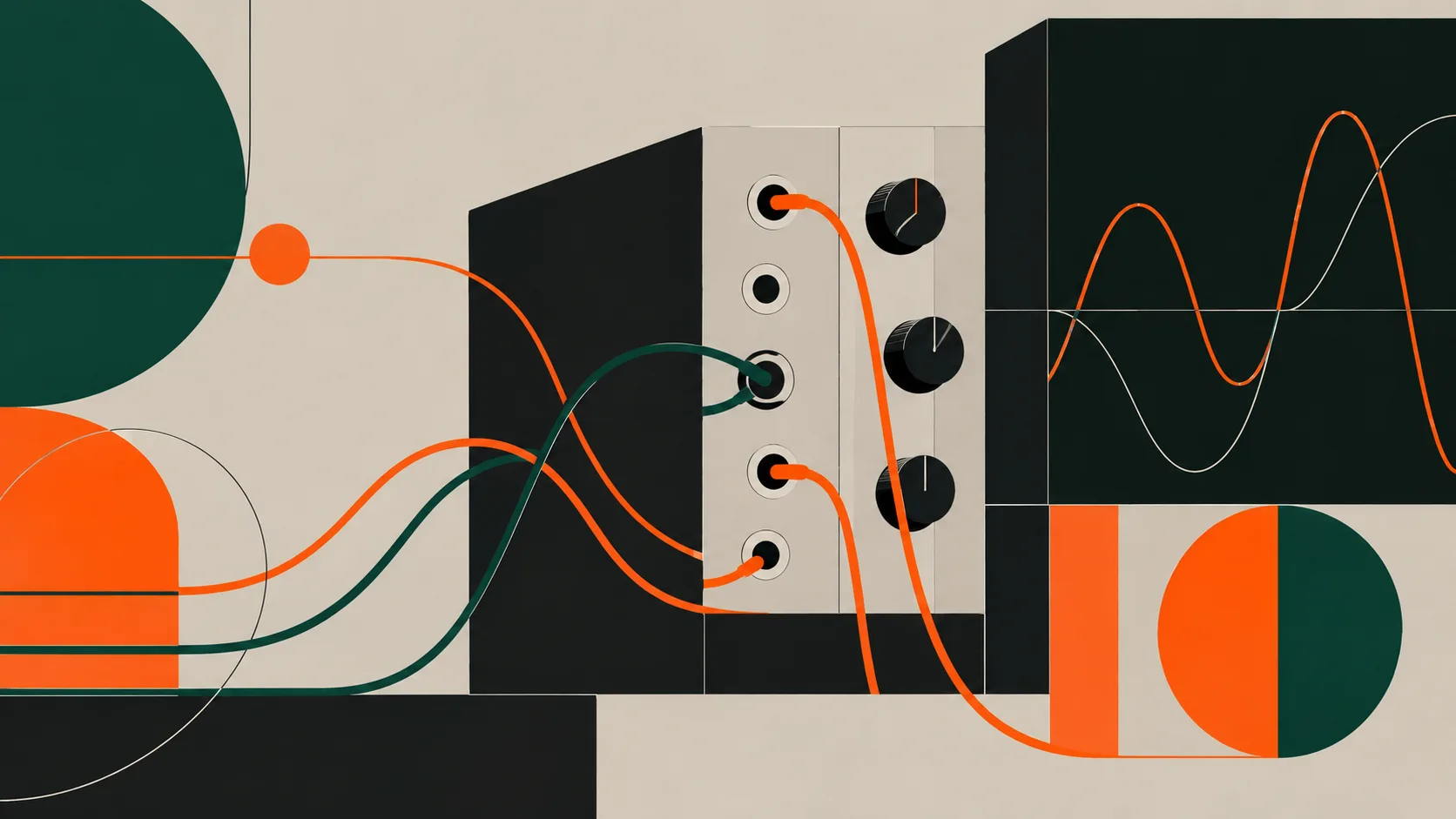
The images above belong to this lineage in different ways: a sunlit room in Rome with a record turning slowly beside the window, and the tangled patch cables of a synthesizer, the instrument that would make so much ambient music possible. One is about the place where we listen, the other about the machinery of sound. Satie cared about both.
Listening sideways
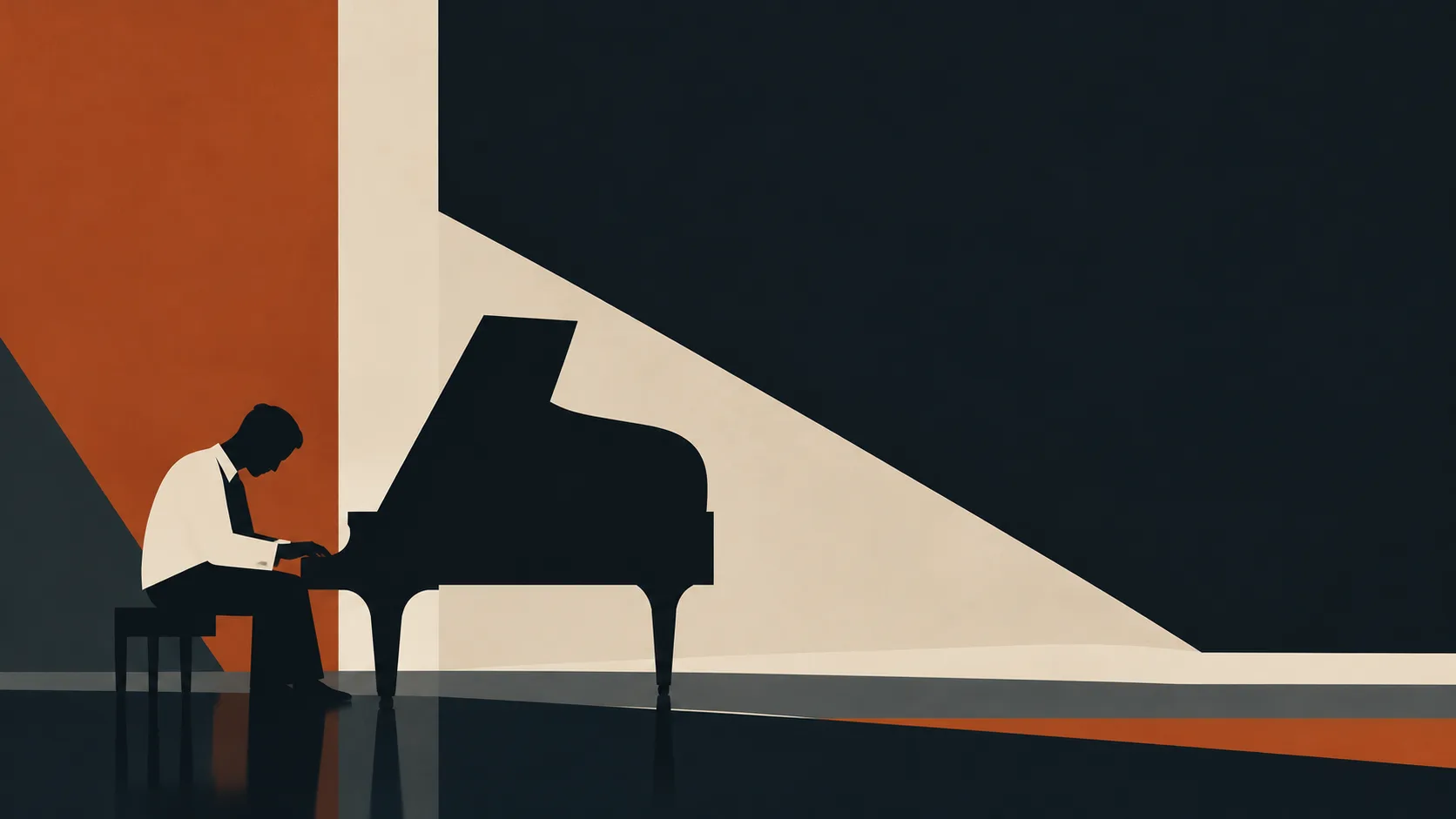
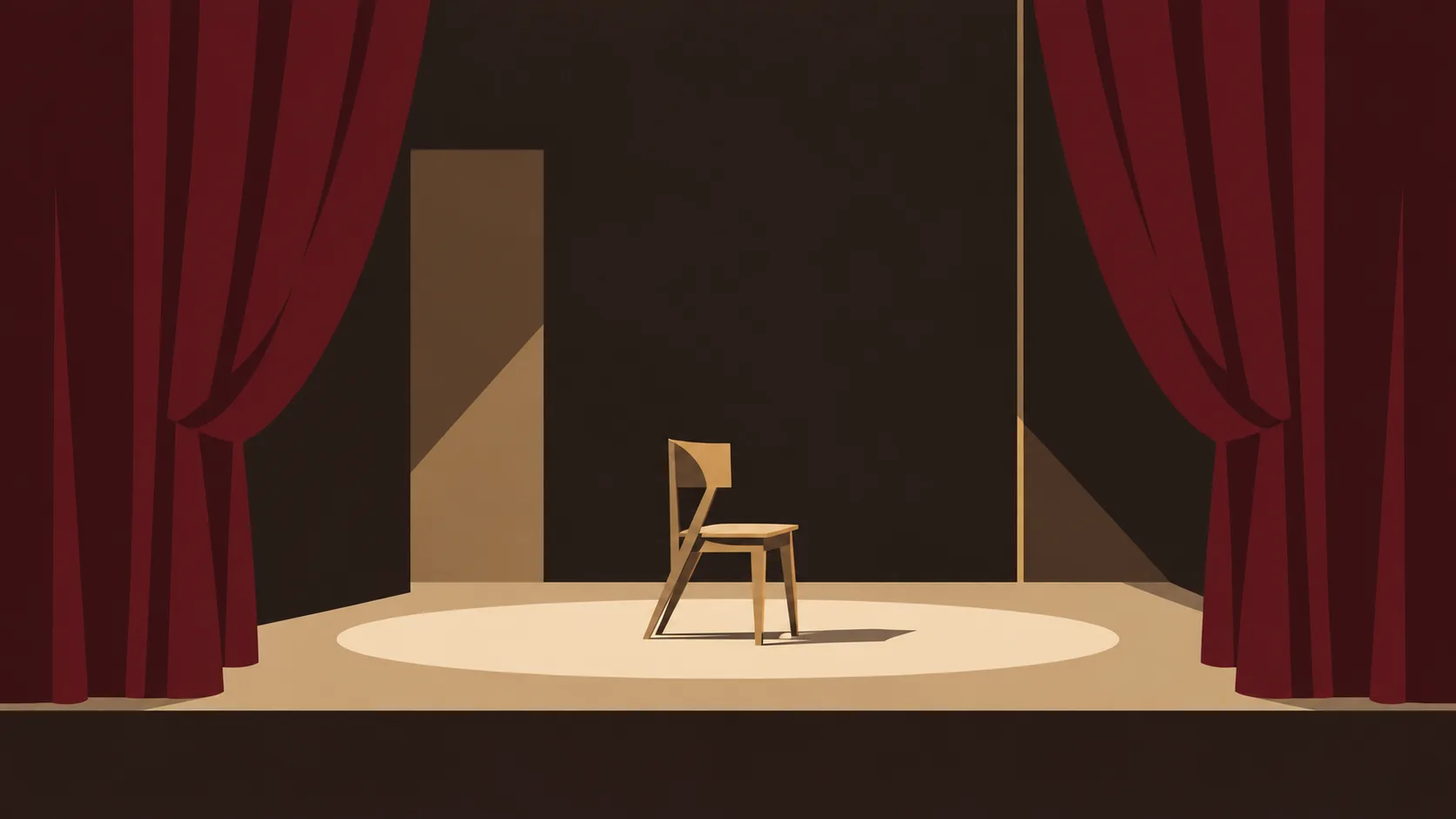
The featured image shows a lone pianist at a grand piano, half in shadow, lit by a single shaft of light. It is the classic picture of concentrated performance, and it is not quite what Satie wanted. He wanted to dissolve the stage, to let the piano blend into the furniture and the evening.
We now live in the world he imagined, where music plays almost everywhere and most of it is designed not to be listened to closely. That has its costs. But Satie’s insight remains a generous one. There are many ways to hear, and not all of them involve sitting still in the dark. Sometimes the best music is the one you notice only when it stops.




View comments (0)