
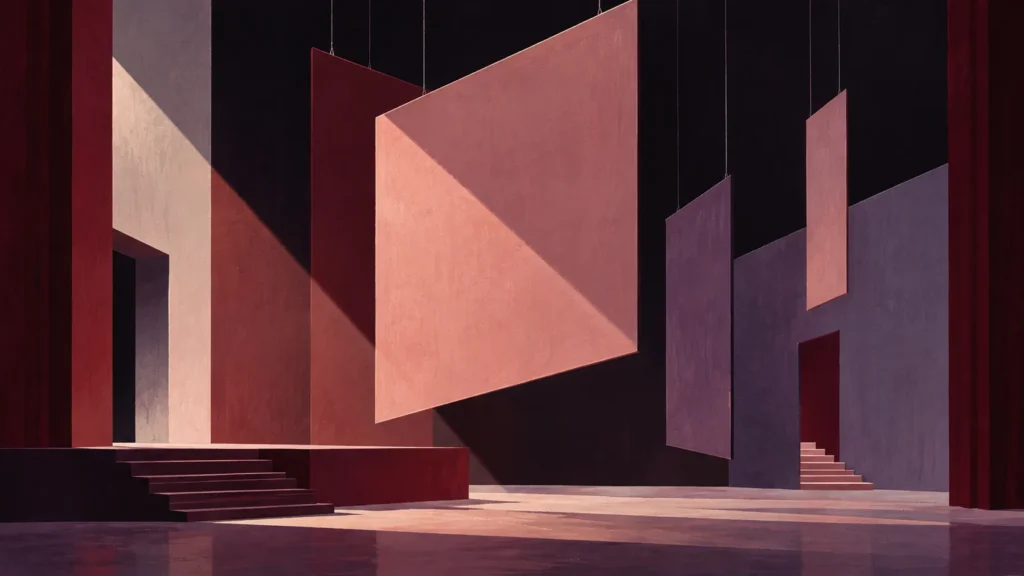
In 1910 the English designer Edward Gordon Craig took out a patent for an improvement in stage scenery. It described a set of tall, plain, hinged screens that could be folded, unfolded and rearranged in full view of the audience, building and dissolving architectural spaces as a play went on. There would be no painted backdrops, no perspective tricks, no illusion of a real room. Only planes, light and the actors moving between them.
It sounds modest now. At the time it was a provocation aimed at the whole European theatre, which still relied on painted canvas flats that imitated forests, palaces and drawing rooms in exhaustive detail.
The art of the theatre
Craig was the son of the actress Ellen Terry and the architect Edward William Godwin, and he grew up around Henry Irving’s company at the Lyceum. He acted himself before turning, in his late twenties, to directing and design. His early productions in London, including Purcell’s Dido and Aeneas in 1900, used colour and light in ways that startled audiences. Then, increasingly, he stopped producing and started writing.
The Art of the Theatre is neither acting nor the play, it is not scene nor dance, but it consists of all the elements of which these things are composed.
Edward Gordon Craig, The Art of the Theatre, 1905
That sentence, from the dialogue between a stage director and a playgoer that opens his 1905 book, became a manifesto for a generation of directors. Theatre, Craig argued, should be an art in its own right, with its own materials, rather than a way of illustrating literature.
A school in Florence
In 1908 Craig settled in Florence and began publishing The Mask, a small journal about the art of the theatre that he wrote largely himself, under a crowd of pseudonyms. In 1913 he opened a school in the Arena Goldoni, an open-air theatre he rented in the city, where students built models, tested light and worked on the screens. War closed it the following year.
The screens did reach a real stage. In 1911 W. B. Yeats used a set of them at the Abbey Theatre in Dublin, and he liked the way a few plain surfaces and changing light could suggest a hall, a street or a tower without painting any of them. Our image, with its suspended pink and mauve panels hanging over a dark stage, is a distant descendant of that idea.
Appia and the rhythmic space
Craig was not alone. The Swiss designer Adolphe Appia had been arguing since the 1890s that the flat painted backdrop was incompatible with a living, three-dimensional actor. At Hellerau, near Dresden, he worked with the music educator Émile Jaques-Dalcroze on a festival hall with no proscenium, a lit translucent ceiling and stepped platforms. The productions of Gluck’s Orpheus and Eurydice staged there in 1912 and 1913 drew visitors from across Europe.
Appia’s spaces were made for bodies: stairs to climb, levels to descend, light that changed with the music. Craig’s were made for the eye. Between them they defined much of what the twentieth century would mean by scenography.
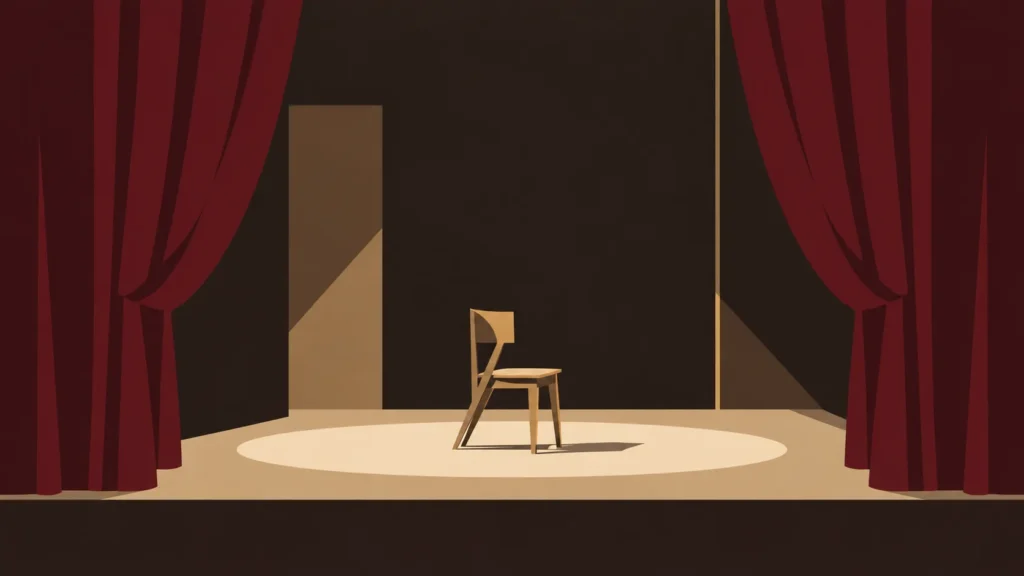
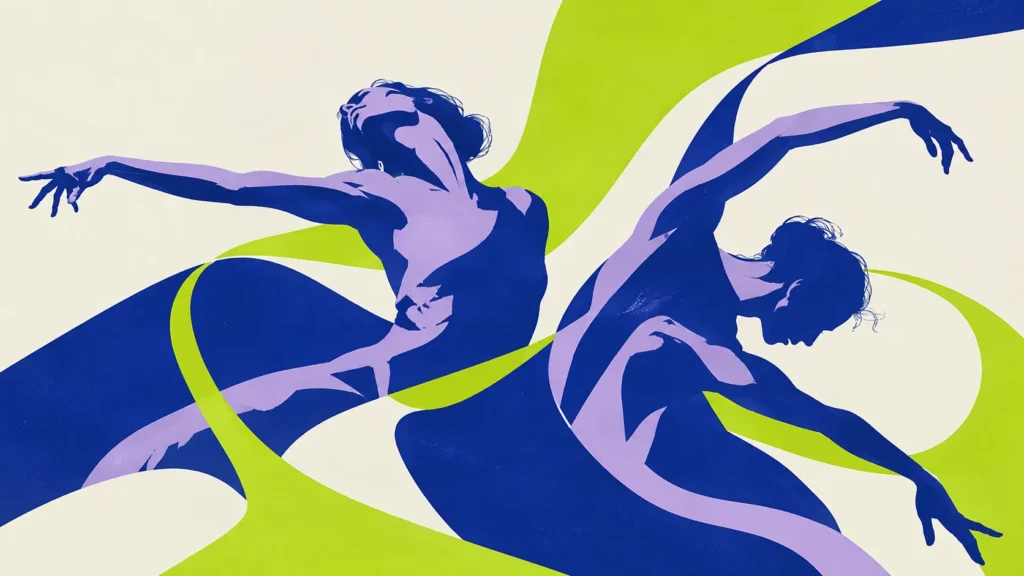
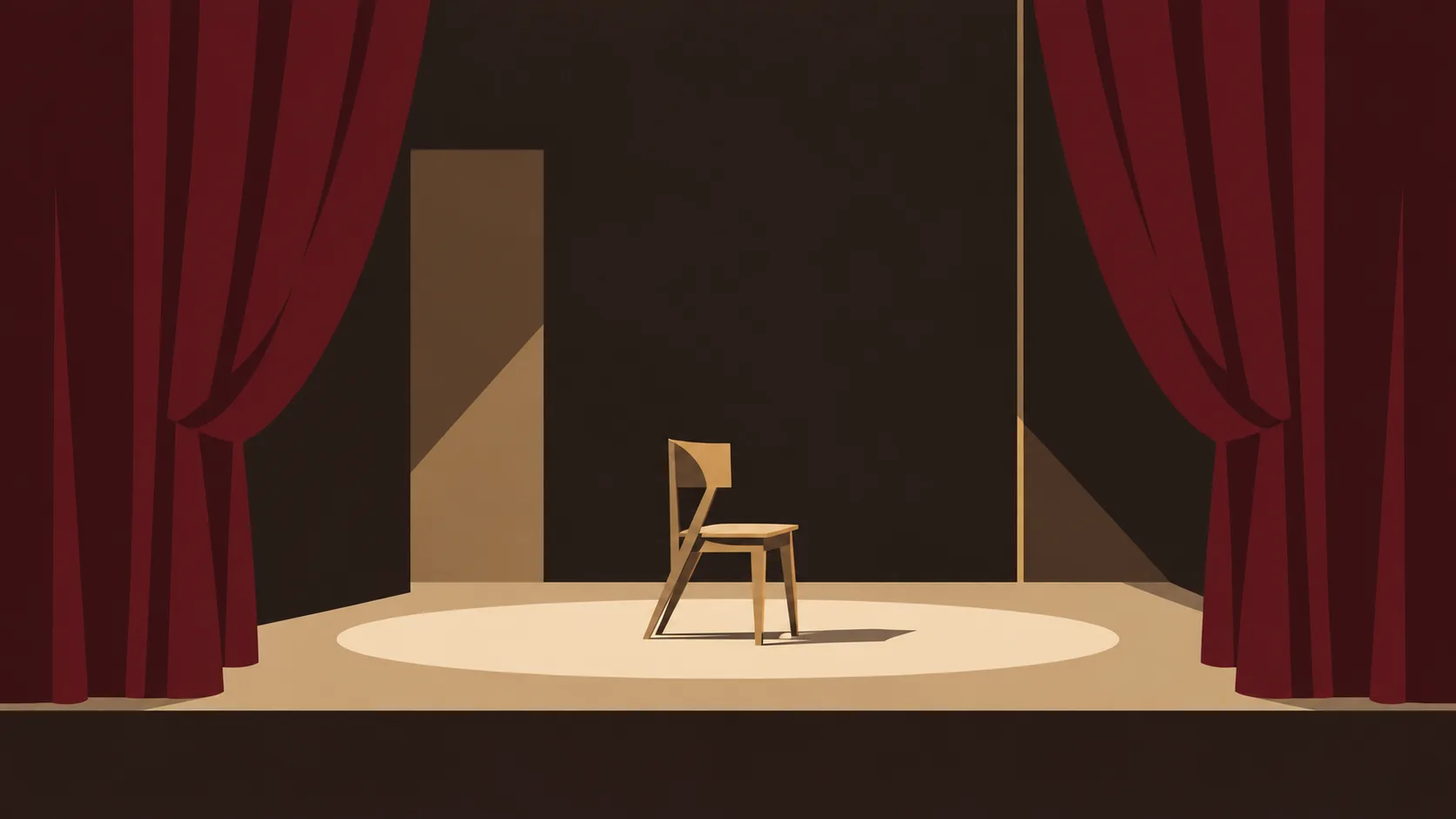
The bare chair in a pool of light and the two dancers in mid-flight both belong to the world these two men opened up. One is all stillness and the other all motion, but in both the space is shaped by the figure rather than painted around it.
The long afterlife
Few companies now stage Shakespeare in front of painted castles. The influence of Craig and Appia runs through Josef Svoboda’s designs of light and projection in Prague, through Robert Wilson’s slow, luminous tableaux, and through countless small productions that make do with a few panels and a good lighting desk.
Craig spent his last decades in France, writing, drawing and editing, more admired than employed. He died in Vence in 1966, having lived long enough to see his ideas become common sense, and long enough to grumble that hardly anyone had understood them properly.



View comments (0)