
Luis Barragán built very little by the standards of his century, and almost all of it within reach of Mexico City and Guadalajara. Yet when the Pritzker jury chose him as its second laureate in 1980, it was recognising something the profession had begun to forget: that a wall can be the whole idea of a building.
His own house in Tacubaya, finished in 1948 and listed by UNESCO in 2004, gives almost nothing to the street. A plain, rough-rendered facade, a few windows, a door. Inside, the plan unfolds as a sequence of rooms that are less about function than about the quantity and colour of light each one receives. A staircase without a handrail climbs toward a roof terrace walled so high that only the sky is left to look at.
Colour as a material
Barragán’s colours are often described as Mexican, which is true and also too easy. He learned a great deal from his friend the painter Jesús “Chucho” Reyes, who worked in cheap aniline dyes on tissue paper, and from the rose and ochre washes of village walls. But the colours work architecturally rather than decoratively. A pink plane at the Cuadra San Cristóbal, the stables he designed with Andrés Casillas in the late 1960s, is not a pink wall so much as a device for making the afternoon visible. As the sun moves, the colour passes through a dozen states, and the water of the horse pool doubles each of them.
This is why photographs of his work, beautiful as they are, tend to mislead. They freeze a single moment of a building designed to be experienced across a day. The famous images of the Satélite towers, the tall coloured prisms he made with Mathias Goeritz in 1957 as a gateway to a new suburb, show them as flat cut-outs against an empty sky. Driven past at speed, which is how they were meant to be seen, they rotate and overlap like a slow piece of music.
The argument for silence
The text of his Pritzker acceptance speech is short and unfashionably earnest. It is mostly a list of the things he believed architecture had lost.
It is alarming that publications devoted to architecture have banished from their pages the words Beauty, Inspiration, Magic, Spellbound, Enchantment, as well as Serenity, Silence, Intimacy and Amazement.
Luis Barragán, Pritzker Prize acceptance speech, 1980
Read today, the list sounds almost naive. Architectural writing has since recovered a vocabulary for atmosphere, thanks in part to Peter Zumthor and Juhani Pallasmaa, but the underlying complaint still holds. Most buildings are designed to be read on a plan or in a rendering, at a distance, rather than inhabited slowly. Barragán’s houses insist on the slow version. They are full of thresholds that make you stop: a dark corridor before a bright patio, a low door before a tall room, a screen of trees before a pool.
What the gallery shows
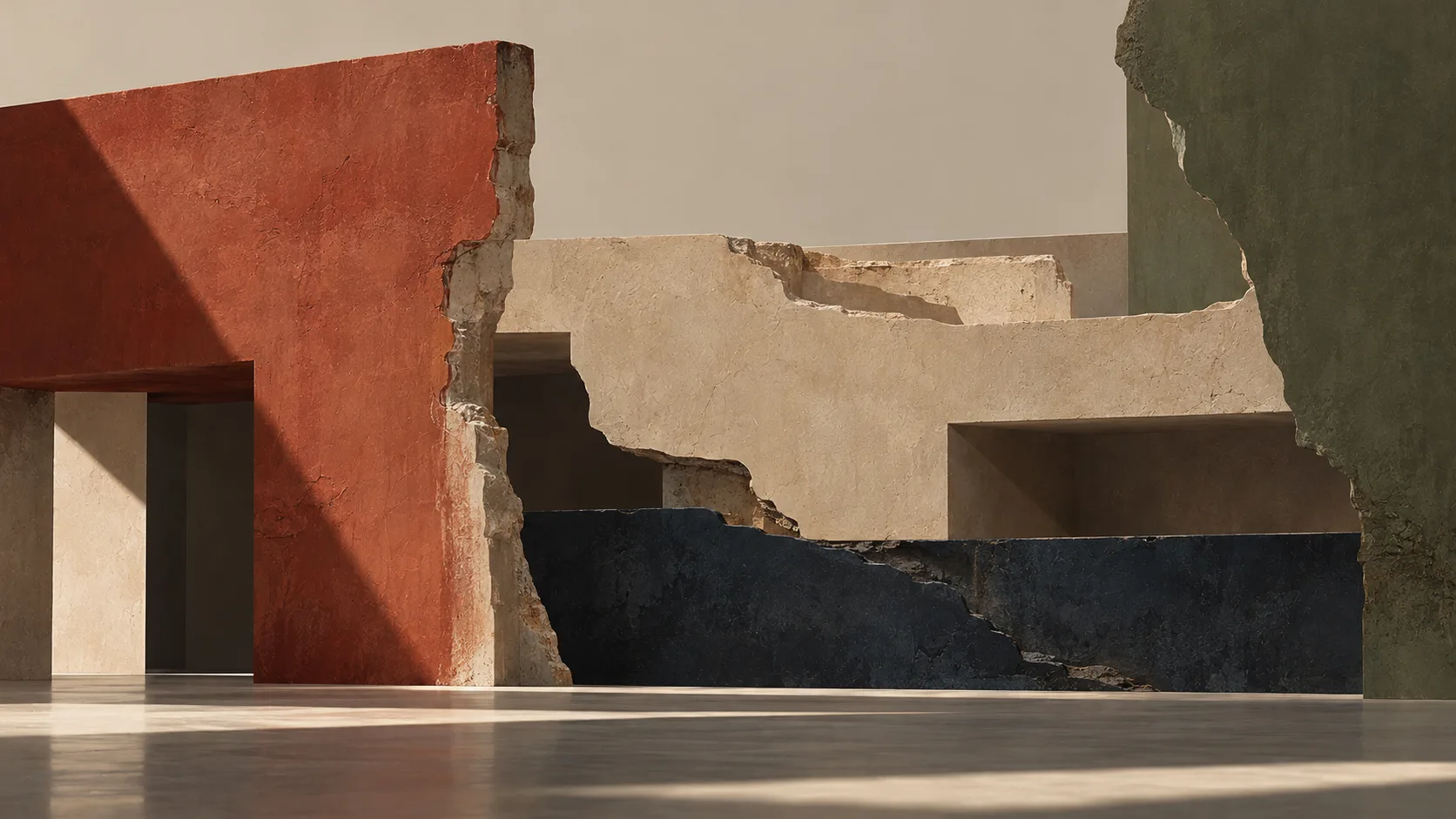
The images gathered here are not of Barragán’s buildings, and that is partly the point. They show how far his vocabulary has travelled: the floating slab, the rust-red wall, the stair that becomes a piece of sculpture, the still sheet of water that turns a courtyard into a mirror. Some of these are now clichés of a certain kind of hotel and holiday house. Others still carry the original charge.
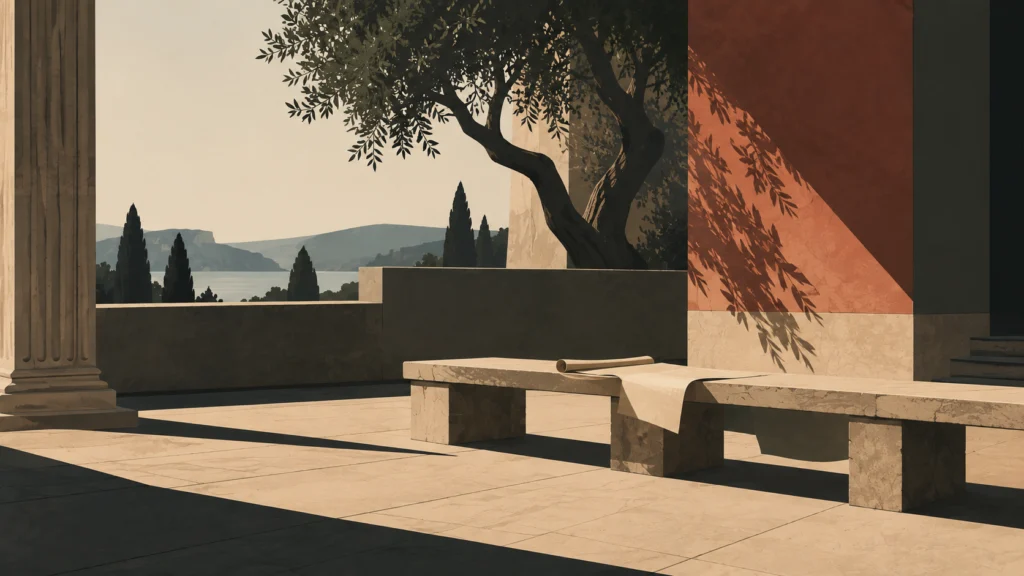
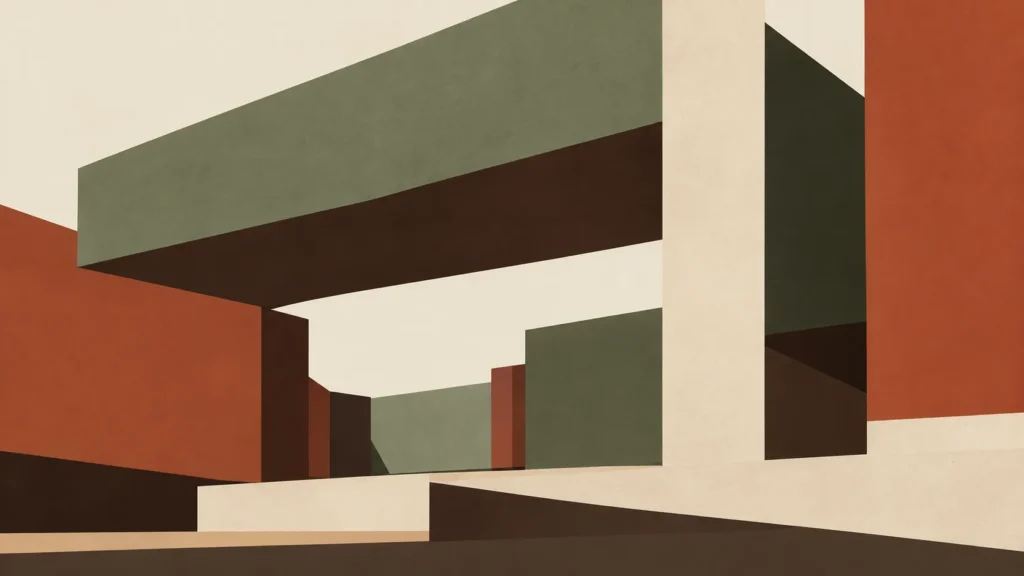
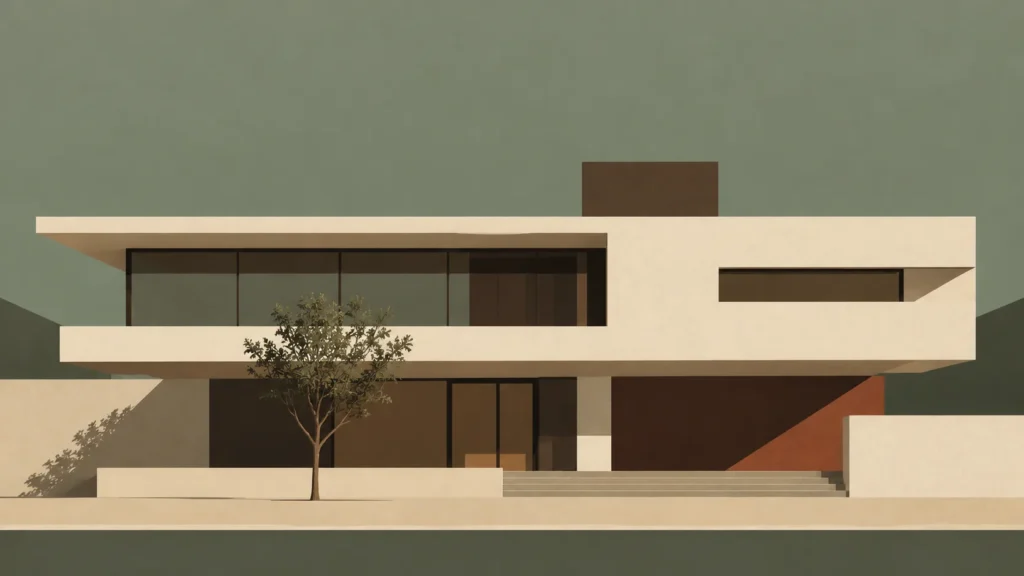
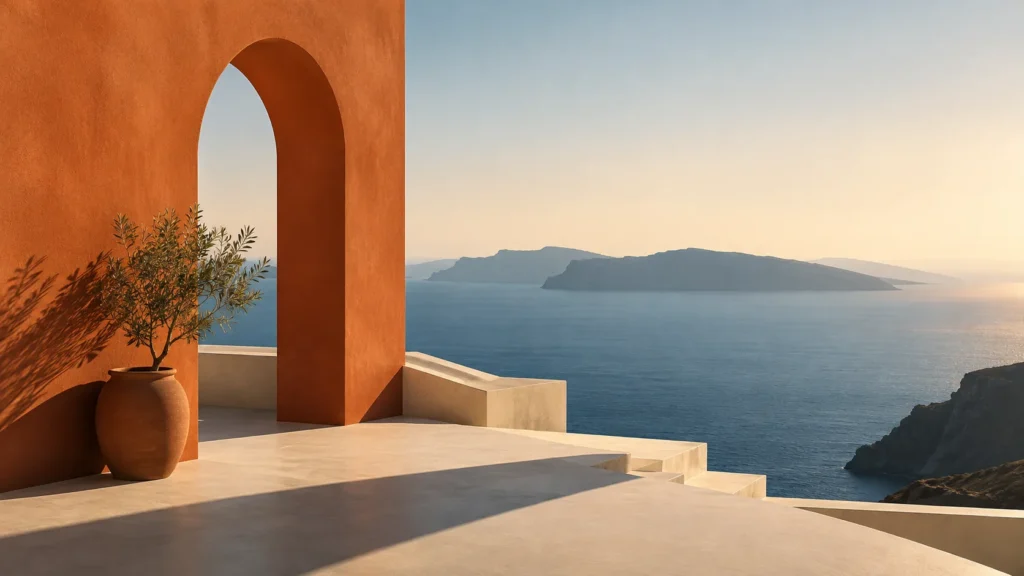
The difference usually comes down to restraint. A Barragán wall is never just a backdrop for a view; it is there to withhold the view until the right moment. When a contemporary building borrows the colour but frames the panorama from every window at once, it keeps the look and loses the argument.
Learning from a private architect
It would be misleading to turn Barragán into a simple moralist of good taste. He worked as a property developer for much of his career, he built for wealthy clients, and his gardens at El Pedregal were part of a real-estate venture as much as a landscape experiment. The serenity he championed was, in practice, often a serenity for the few.
Still, a few principles survive any reasonable criticism:
- A wall can do more than enclose; it can edit what you are allowed to see.
- Colour is a way of recording time, not only of finishing a surface.
- Water is most powerful when it is still and close to the ground.
None of these needs a large budget. They need patience, and a willingness to design for the person who stays rather than for the camera that passes through. That is a modest demand, and it remains surprisingly rare.

View comments (0)