
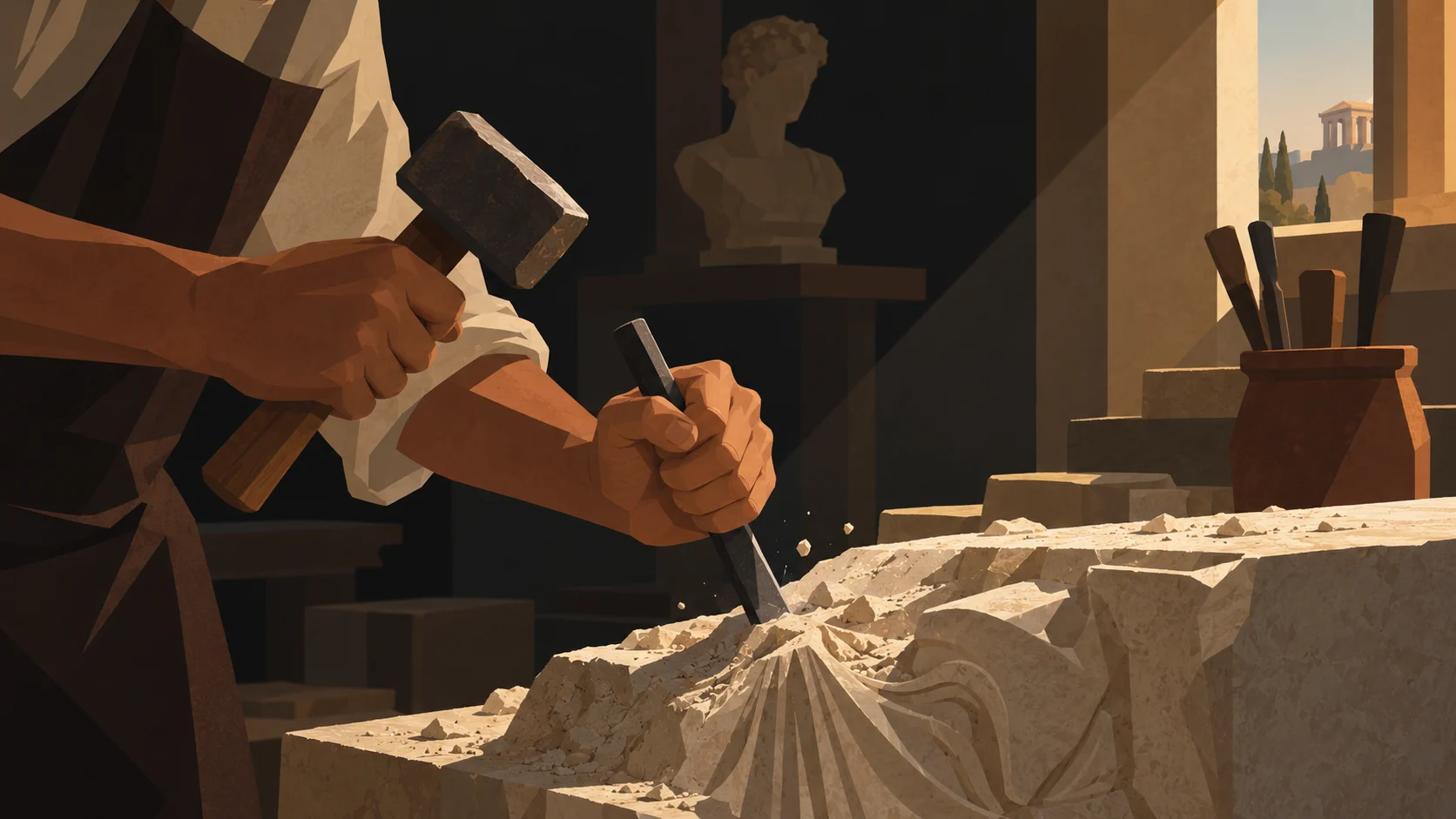
The lectures in The Two Paths were given to audiences who made things for a living: wallpaper, ironwork, pottery. Ruskin wanted them to stop thinking of art as something that happened elsewhere, in galleries.
His sentence sets three conditions. The hand must be trained, the head must understand what it is doing, and the heart must care. Take away any one and you get mechanical work, clever work or sentimental work.
William Morris read Ruskin at Oxford and built a firm on the idea. A century and a half later the sentence still works as a checklist for anyone deciding whether a thing was made or merely produced.








View comments (0)